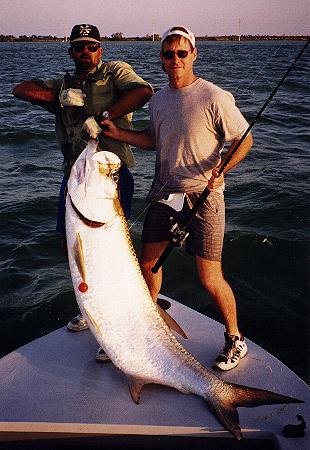
Choosing the right type of fishing rod is important, and it largely depends on the types of fishing that you intend to take part in. In the case of fishing for salmon, there are basically two types of fishing rods: the fly rod and a spinner, and the bait rod. Both of these are different from each other in terms of the types of reel that they utilize. Of course, if you see in the market today, there are many rods being advertised as being the dual purpose rods. These could be suitable for some anglers, but take it from the experienced enthusiasts, having two specialized rods is much better and more advisable than having one dual purpose rod.
The Fly Rods
A typical fly salmon fishing rod is longer and more flexible than the bait rod. It is also lighter through the butt and the handle. For salmon fishing, opt for the double handed fly rod. This will enable you to cast with both hands or with either hand. This is also a better solution for the heavier lines and reels that you will use when you are angling for the bigger and heavier salmon.
The length of your average fly salmon fishing rods could be anywhere from ten to fifteen feet. This will provide an additional height to your casting action especially when you are in deeper waters or if you opt for fishing from a boat. For women and children as well as shorter men, there is the option of the under 12-feet rods, while taller men and anglers who wish to fish in large waterways should go for the rods which are fourteen to fifteen feet in length. However, regardless of the length, the rod has to be flexible and able to bend the length of the rod and quickly snap back into place, which in turn makes your casting more accurate. In choosing a rod, remember to keep it slender to get rid of wind resistance, but keep it heavy enough to withstand the battle with a 10 - 30 pound salmon.
The Bait Rods
To have maximum control over the salmon as it fights in the water, a bait salmon rod is built in such a way that it has a tough butt end. For larger fish, do choose rods which are medium to heavy, and for salmon especially, choose heavy rods. More so if you plan on using downriggers and go trolling in your fishing boat.
Even though bait rods should be heavy, choose one that is sensitive enough so you can "feel" the fish as it is at the end of the bait. Do remember that bait rods will be heavier if you go for longer bait or spinner rods, especially those seven to ten foot salmon bait rod. However there is generally no hard and fuss rule, as it will all in the end depend on you.
Typically, graphite is utilized for making salmon fishing rods. However, other materials such as e-glass may also be used in order to increase the flexibility of the rods while at the same time, not compromising on the strength of the rods.
Besides that, take into consideration the handle of the rod. The handle has to be comfortable to grip, more so in the cold water that usually goes hand-in-hand with salmon fishing seasons. Ideally, the guides should be centered and smooth and made from rust proof materials such as aluminum oxide. Do keep in mind that the pressure from the pulling of the fish will be directly on the guides, so the construction of this vital part of the rod is critical to getting the salmon.
By: juzaily
Article Source: http://www.ArticleStreet.com/
The Fly Rods
A typical fly salmon fishing rod is longer and more flexible than the bait rod. It is also lighter through the butt and the handle. For salmon fishing, opt for the double handed fly rod. This will enable you to cast with both hands or with either hand. This is also a better solution for the heavier lines and reels that you will use when you are angling for the bigger and heavier salmon.
The length of your average fly salmon fishing rods could be anywhere from ten to fifteen feet. This will provide an additional height to your casting action especially when you are in deeper waters or if you opt for fishing from a boat. For women and children as well as shorter men, there is the option of the under 12-feet rods, while taller men and anglers who wish to fish in large waterways should go for the rods which are fourteen to fifteen feet in length. However, regardless of the length, the rod has to be flexible and able to bend the length of the rod and quickly snap back into place, which in turn makes your casting more accurate. In choosing a rod, remember to keep it slender to get rid of wind resistance, but keep it heavy enough to withstand the battle with a 10 - 30 pound salmon.
The Bait Rods
To have maximum control over the salmon as it fights in the water, a bait salmon rod is built in such a way that it has a tough butt end. For larger fish, do choose rods which are medium to heavy, and for salmon especially, choose heavy rods. More so if you plan on using downriggers and go trolling in your fishing boat.
Even though bait rods should be heavy, choose one that is sensitive enough so you can "feel" the fish as it is at the end of the bait. Do remember that bait rods will be heavier if you go for longer bait or spinner rods, especially those seven to ten foot salmon bait rod. However there is generally no hard and fuss rule, as it will all in the end depend on you.
Typically, graphite is utilized for making salmon fishing rods. However, other materials such as e-glass may also be used in order to increase the flexibility of the rods while at the same time, not compromising on the strength of the rods.
Besides that, take into consideration the handle of the rod. The handle has to be comfortable to grip, more so in the cold water that usually goes hand-in-hand with salmon fishing seasons. Ideally, the guides should be centered and smooth and made from rust proof materials such as aluminum oxide. Do keep in mind that the pressure from the pulling of the fish will be directly on the guides, so the construction of this vital part of the rod is critical to getting the salmon.
By: juzaily
Article Source: http://www.ArticleStreet.com/